How Long to Learn AI Agents: A Practical 2026 Guide
Estimate realistic timelines for learning AI agents, with structured study plans, milestones, and actionable tips to achieve competence in 2026.


Why learning AI agents matters
According to Ai Agent Ops, learning AI agents is a practical, incremental journey that scales with experience. For product teams and developers, mastering agentic AI enables smarter automation, faster decision-making, and better orchestration across systems. The timeline to competency depends on your background, the complexity of goals, and how you combine theory with hands-on practice. This article explains typical timeframes, what to learn, and how to structure your study so you can start delivering value within weeks and progress toward mastery over months. Expect to invest deliberate practice, project work, and reflection to cement skills.
Core concepts you’ll learn
Learning AI agents covers a core set of concepts that recur across tools and platforms. You’ll study agent architectures (decentralized vs centralized control), prompt design patterns, context management, memory and state handling, action loops, safety and guardrails, evaluation metrics, and integration with external APIs. You’ll also encounter different agent paradigms, such as plan-and-execute loops, goal-driven prompts, and tool-use orchestration. As you progress, you’ll connect these concepts to real applications like automation pipelines, chat-based assistants, and decision-support agents. A strong foundation in these areas accelerates later mastery.
Practical study plans and timelines
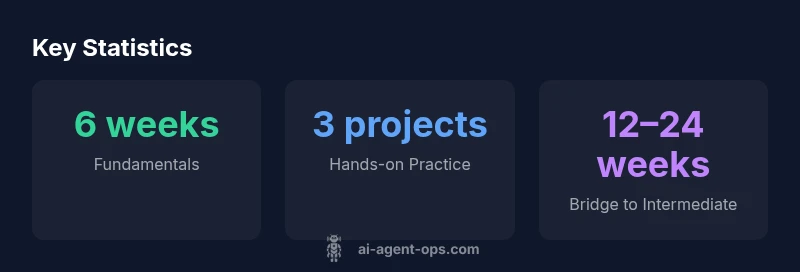
For many developers, a fundamentals track takes approximately 6–12 weeks of regular study to establish a workable foundation. Building toward intermediate competence often requires an additional 3–6 months, and true mastery can take 1–2 years of consistent practice and diverse project work. Your exact timeline depends on prior AI experience, time available per week, and the quality of practice. A structured plan with weekly goals, hands-on projects, and periodic reviews tends to shorten the learning curve. Remember that small, repeatable wins reinforce long-term progress.
Hands-on projects that accelerate learning
Projects are the fastest way to translate theory into capability. Start with a small autonomous agent that accomplishes a single task, such as automating a data fetch-and-forward workflow. Next, build a multi-step agent that uses a toolset (APIs, databases, or files) to complete a user-requested objective. Finally, design a guardrail-enabled agent that can explain its decisions and gracefully handle failures. For each project, document decisions, reflect on what worked, and iterate weekly. Concrete deliverables (code, demos, and readme) provide motivation and a measurable path forward.
Tools, languages, and platforms to focus on
Most learners benefit from a Python-centric stack, with exposure to JavaScript for front-end integrations. Core tools include AI agent frameworks and libraries, language models (LLMs), and orchestration patterns such as LangChain or similar toolkits. Learn to call AI APIs securely, handle retries, and manage prompts at scale. Understand data flows, logging, observability, and error handling. Familiarize yourself with version control practices, testing strategies, and basic software design principles that apply to agentic workflows.
Balancing theory and practice for faster progress
A balanced approach—alternating between short theory sessions and longer project sprints—produces better retention and application. Schedule focused study blocks, then spend time integrating concepts into small, repeatable projects. Use iterative improvement: plan, implement, test, reflect, and adjust. Leverage community resources, code reviews, and example projects to accelerate learning. Prioritize practical impact over exhaustive theory in the early stages, then layer in deeper concepts as your projects grow in complexity.
How to measure progress and stay motivated
Track progress with clear milestones: a fundamentals milestone (complete a basic agent project), an integration milestone (combine agent with at least two tools), and a governance milestone (document guardrails and safety checks). Use lightweight metrics like time-to-first-delivery, number of iterations, and quality of demos. Regular reflection helps sustain motivation—celebrate small wins, identify gaps, and adjust learning plans. A steady cadence of demonstrations, feedback, and incremental improvements keeps momentum high.
Quick-start roadmap you can follow this week
Day 1–2: Define your goal with AI agents and skim beginner tutorials. Day 3–4: Set up your development environment, choose a toolkit, and run a guided example. Day 5–7: Build a simple agent that fetches data and presents outputs; document what you did and why. Next week, add a second tool integration, implement basic guardrails, and prepare a short demo. Keep a weekly log to track progress and adjust goals as you learn.