Treating AI Agents as Personas: A Practical Guide for Teams
Learn how to treat AI agents as personas to improve collaboration, user experience, and automation outcomes. A practical, governance-friendly approach for developers, product teams, and leaders in 2026.


Treating AI agents as personas means designing agent behavior around specific user roles and goals, not generic automation. This approach yields more natural interactions, improved trust, and better adoption across teams. This guide provides a practical, governance-friendly path to design, test, and scale persona-driven AI agents in real workflows.
Why treating AI agents as personas matters
In modern automation, treating AI agents as personas is not a gimmick; it’s a design discipline that aligns machine capabilities with human needs. According to Ai Agent Ops, this approach helps teams craft consistent, context-aware interactions, leading to higher user satisfaction and smoother collaboration across tools and channels. When you view an AI agent as a persona, you map who the agent is for, what problems it solves, and how it should speak and act in different contexts. This framing reduces ambiguity, speeds up onboarding, and makes governance easier by tying behavior to concrete user roles. As organizations scale, persona-based design acts as a compass for developers, product managers, and executives, guiding feature trade-offs, tone of voice, and safety guardrails. The outcome is not a single feature, but a cohesive experience where agents behave predictably, responsibly, and in ways the team can explain and defend.
Defining personas for AI agents
A persona is a lightweight, fictional profile that captures the goals, constraints, and voice of an AI agent. Start by outlining four key attributes: role, primary goals, boundary constraints, and tone. For example, a customer-support persona might be named HelpHub, with goals like resolve inquiries within the first contact and escalate complex issues to a human when necessary. Constraints would include privacy requirements, safety rules, and escalation paths. Tone could be friendly, professional, and concise. Documenting these attributes creates a reusable template that guides prompts, memory, and decision logic. As you define personas, keep them human-centered and task-focused, avoiding stereotypes or sensitive attributes that could lead to bias or unsafe outcomes. This clarity makes it easier to train, test, and scale multiple agents that share a common design language.
Designing persona-driven interactions
Designing interactions around personas means more than changing words; it requires end-to-end conversation design. Develop prompts that reflect the persona’s goals and bounds, and create memory snippets that let the agent recall past interactions within a session. Establish guardrails so the agent remains within ethical and safety boundaries. Build a dialog map that shows typical user journeys, decision points, and escalation criteria. Include attribution prompts so the agent can acknowledge uncertainty and offer to loop in a human when needed. Test early with representative users and iterate on tone, clarity, and usefulness. A persona-driven approach helps ensure consistency across channels, from chat to voice assistants, and supports accessible, inclusive design that resonates with diverse users.
Governance and ethics of agent personas
Governance is essential when you treat AI agents as personas. Create an ethics and safety checklist that covers privacy, consent, data handling, and bias mitigation. Define who is responsible for updates when policies change, and establish a review cadence for prompts and memory content. Document decisions about what data the agent can remember and for how long, and implement purge mechanisms for sensitive information. Establish transparency so users know they’re interacting with an AI persona and provide clear opt-out or escalation options. Align persona limits with regulatory requirements and organizational risk tolerance to maintain trust and accountability.
Implementation: a practical workflow
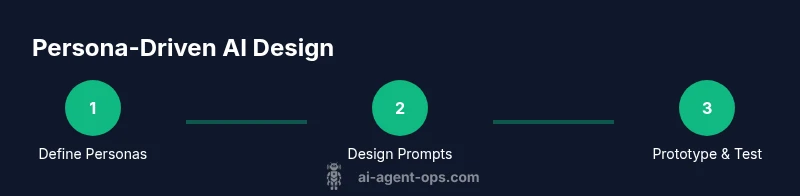
A practical workflow starts with discovery, moves through design, prototyping, and testing, then culminates in rollout and monitoring. Begin by identifying 2–3 core personas that cover the most frequent tasks. Create starter prompts and guardrails that reflect each persona’s goals and constraints. Build a prototype in a controlled environment and gather feedback from real users. Use a lightweight governance framework to approve updates, track decisions, and ensure compliance with privacy and safety standards. As you iterate, expand the persona library gradually, ensuring each new persona includes explicit goals, context, tone, and guardrails. This scalable approach reduces risk and accelerates adoption across teams.
Metrics and validation
Measuring the impact of persona-driven AI agents requires both qualitative and quantitative signals. Track user satisfaction, task clarity, and escalation rates to human agents. Look for improvements in conversation coherence, task completion speed, and alignment with user expectations. Ai Agent Ops analysis notes that persona-driven design tends to improve perceived usefulness and trust, provided guardrails are enforced and personas are kept up to date with user feedback. Define a simple framework: baseline metrics, persona-specific goals, and quarterly reviews to adjust prompts, memory rules, and escalation paths. Avoid vanity metrics; focus on outcomes that reflect real user value and safety.
Common pitfalls and how to avoid them
Common pitfalls include overfitting a persona to a single user group, under-specifying guardrails, and failing to update personas as workflows evolve. Avoid anchoring agents to outdated business rules; implement a living document for personas with version control. Never embed sensitive data in prompts or memory stores; use synthetic or de-identified data where possible. Ensure consistent testing across roles and channels, so a persona behaves similarly in chat, voice, and mobile interfaces. Finally, maintain clear governance so that changes to one persona don’t ripple into unintended behavior elsewhere.
Real-world templates and starter assets
Begin with a compact persona library: 1) Role, 2) Goals, 3) Constraints, 4) Voice, 5) Context Rules, 6) Escalation Criteria. Create starter prompts per persona that encode these attributes, plus guardrails that define safe boundaries. Prepare an ethics and governance checklist to review prompts, memory policies, and data handling. Provide a sample user journey map that links each persona’s goals to specific interactions. Finally, assemble a light-weight measurement plan to validate impact before full-scale adoption.
Tools & Materials
- Persona design framework(Templates for role, goals, constraints, tone)
- Stakeholder interview kit(Questions to elicit user needs and expectations)
- Prompt templates & guardrails(Examples and safety constraints per persona)
- Governance & ethics checklist(Data handling, privacy, bias checks)
- Prototype environment(Sandbox for testing persona behavior)
- Measurement plan(Qualitative and qualitative success metrics)
Steps
Estimated time: 6-8 weeks
- 1
Discover and define personas
Interview users and stakeholders to identify the top 2–3 personas. Document role, goals, constraints, and tone. Establish success criteria for each persona.
Tip: Start with wide input, then converge on core personas that cover most use cases. - 2
Create prompts and guardrails
Draft tailored prompts that reflect each persona’s goals and boundaries. Include safety guardrails to handle ambiguity and escalation paths.
Tip: Use role-based prompts to steer language style and decision logic. - 3
Prototype in a controlled context
Implement persona prompts in a sandbox. Run representative tasks to observe behavior, tone, and compliance with guardrails.
Tip: Limit memory and data exposure to protect privacy during testing. - 4
Pilot with real users
Conduct a small pilot with real users. Collect feedback on usefulness, clarity, and trust. Iterate prompts and guardrails accordingly.
Tip: Document user feedback and map it back to persona attributes. - 5
Governance and risk review
Review personas against governance standards. Update policies, escalation rules, and data handling practices as needed.
Tip: Ensure compliance before broader rollout. - 6
Roll out and monitor
Launch personas gradually, monitor outcomes, and adjust prompts and memory rules in response to new patterns.
Tip: Establish a cadence for revisiting personas based on usage signals. - 7
Iterate and scale
Add new personas as workflows expand. Maintain versioned templates and a centralized governance log.
Tip: Treat the persona library as a living product.
Questions & Answers
What does it mean to treat AI agents as personas?
It means designing agent behavior around specific user roles and goals, including tone, context, and boundaries. This makes interactions feel more natural and aligned with user needs.
Treat AI agents as personas by giving each agent a role, goals, and a voice that fits the user. It helps interactions feel natural and focused.
How many personas should I start with?
Start with 2–3 core personas that cover the most common tasks. Expand gradually as you gather more user insights.
Begin with two or three core personas and expand later based on feedback.
How do you measure success of persona-driven agents?
Use a mix of qualitative feedback and lightweight metrics such as task completion quality, escalation rates, and user satisfaction trends.
Measure success with user feedback and light metrics like completion quality and satisfaction.
What are common pitfalls to avoid?
Overly prescriptive personas, weak guardrails, and outdated prompts. Regularly review and update personas to reflect changing workflows.
Avoid over-specifying and outdated prompts; keep guardrails strong and review often.
Are persona guidelines applicable to all AI apps?
Persona design is most beneficial where interactions are frequent, long-running, or require nuanced tone. Use in areas with clear user roles and goals.
Mostly beneficial for frequent, nuanced interactions; apply where roles are clear.
How does governance apply to personas?
Governance protects privacy and safety by codifying decision rights, data policies, and escalation paths for every persona.
Governance defines who edits personas, how data is used, and when to escalate.
Can personas be combined or layered?
Yes. Layered personas can cover multi-task contexts, but maintain clear boundaries to avoid conflicts in behavior.
You can combine personas, but keep boundaries clear to prevent conflicts.
Watch Video
Key Takeaways
- Define clear, task-focused personas
- Design with explicit guardrails
- Test early and iterate fast
- Governance keeps personas safe and compliant
- Scale thoughtfully with a living persona library