AI Agent Developer Salary in 2026: Benchmarks & Trends
Explore 2026 salary benchmarks for AI agent developers, including regional differences, experience bands, and how to structure offers with growth paths and equity.


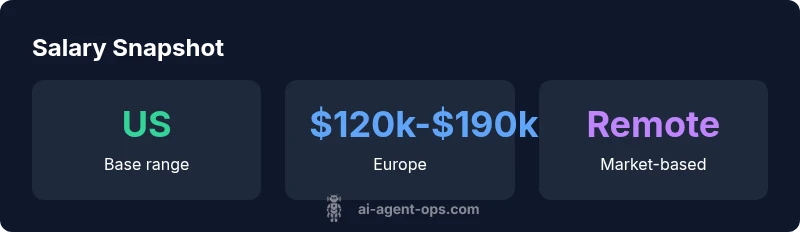
AI agent developer salaries in 2026 vary by region, experience, and company size. In the United States, base pay generally sits in the six-figure range, with mid-level specialists often earning roughly $120k–$180k and more senior or specialized roles pushing toward $200k+. Total compensation can include equity and bonuses, especially at growth-stage firms or enterprise teams.
Salary landscape in 2026\n\nAccording to Ai Agent Ops, the salary landscape for AI agent developers is shaped by location, experience, and domain expertise. Across regions, compensation reflects talent scarcity and company stage, from early startups to large tech incumbents. In the United States, base pay for mid-level roles typically sits in the six-figure range, with seniors commanding higher packages that may include equity. Global markets show broader bands influenced by cost of living, currency strength, and local demand. Remote roles further blur these boundaries, offering opportunities to access higher-paying markets while balancing living costs. As AI agents become more capable, teams increasingly value not only software skills but also the ability to architect reliable agent workflows and evaluate product impact.
Key factors shaping compensation\n\nSeveral levers determine AI agent developer pay. Location is paramount: markets in the United States and Western Europe typically offer higher base salaries, while regions with growing AI ecosystems can close the gap with robust remote options. Company size and stage also matter: startups may lean toward equity-heavy packages, whereas established firms tend to provide larger base salaries plus structured bonus plans. In-demand technical skills drive premium compensation. Key areas include agent orchestration, prompt engineering for long-context agents, memory networks, and end-to-end MLOps, plus experience deploying reliable agent workflows in production. Experience level and demonstrated impact on product outcomes are critical: hands-on success delivering reliable agentic workflows translates into premium offers. Certifications and practical fluency with toolchains (LLMs, RAG workflows, tool-using agents) can tilt offers upward. Finally, non-technical factors like leadership potential, collaboration with product teams, and demonstrated outcomes also influence compensation decisions.
Salary ranges by experience level\n\nJunior AI agent developers (0–2 years) typically command base salaries in the lower end of the six figures, often around $90k–$130k depending on location and company. Mid-level practitioners (3–6 years) commonly land in the $120k–$180k range, with higher totals possible through equity or performance bonuses. Senior contributors (6–10+ years) frequently reach $180k–$250k base, and total compensation can exceed $250k when equity, bonuses, and leadership responsibilities are included. Principal or staff engineers owning system-wide agent architectures may exceed $250k in base pay, with equity playing a larger role in total compensation at startups. Regional variations and company policy can widen these bands considerably.
Regional variations and remote work\n\nSalaries for AI agent developers differ by geography due to market dynamics and cost of living. In the United States, top tech hubs tend to offer higher bands, while other regions provide competitive packages with lower base figures but strong total compensation when equity is included. Western Europe shows robust compensation, especially in finance and tech corridors, though some countries maintain lower nominal bases due to local economics. In India and other APAC markets, base salaries are typically lower, but rapid growth in AI teams and high-demand roles can compress gaps for senior contributors, particularly in multinational or remote teams. Remote work continues to blur lines: many firms set pay against local market data while offering global benefits and cross-border mobility support, making it possible to access higher-paying opportunities without relocating. Transparent salary bands and regular market checks help teams stay competitive.
Negotiating and structuring offers\n\nFrame compensation as a holistic package rather than a single number. A compelling offer includes base salary, annual bonuses, equity, and benefits aligned with role impact. For startups, emphasize vesting schedules, liquidity windows, and performance milestones to justify equity. In established firms, pursue clear promotion ladders, milestone-based bonuses, and retention incentives tied to agent performance. Build a defensible case for salary by mapping expected product outcomes, reliability improvements, and time-to-market gains. Finally, align expectations about remote work, time zones, and required collaboration to ensure a sustainable agreement.
Equity, bonuses, and long-term value\n\nEquity components can meaningfully boost total compensation for AI agent developers, particularly in growth-stage firms. The value of stock options depends on company performance and liquidity timelines, so candidates should consider vesting schedules, tax implications, and exit scenarios. Beyond equity, performance bonuses tied to successful agent deployments and measurable product improvements can align incentives and support retention. When negotiating, ask for a transparent growth plan: how the role scales, the expectations to unlock higher bands, and the criteria for leadership opportunities.
Salary benchmarks by region
| Region | Salary Range (base) | Notes |
|---|---|---|
| United States | 120000-190000 | Typical base range for mid-level to senior AI agent developers |
| Western Europe | 80000-140000 | Varies by country, high cost markets |
| India / APAC | 30000-90000 | Lower-cost markets with growth in AI roles |
Questions & Answers
What is the typical base salary for an AI agent developer?
In the U.S., base salaries for AI agent developers typically fall in the six-figure range, varying by region, company size, and experience. Mid-level roles generally span roughly $120k–$180k, with senior positions higher. Total compensation often includes equity and bonuses, especially in startups or growth-stage firms.
Typically six figures in the U.S.; compensation grows with experience and impact.
How does location affect AI agent developer salary?
Location is a primary driver of pay, with the U.S. and major tech hubs offering higher base salaries than many other regions. Remote roles can bridge gaps, but many firms benchmark pay to local markets while providing global benefits. Cost of living and currency strength also shape total compensation.
Location drives most of the variation; remote work helps, but local market norms apply.
Do salaries differ for contractors vs full-time roles?
Contractors often command higher hourly rates to reflect lack of benefits and job security, but annualized compensation can be lower. Full-time roles tend to offer salary stability, benefits, and explicit growth ladders. The choice affects total compensation and long-term career development.
Contractors may earn more hourly, but less stability and benefits.
Which skills influence salary growth?
Key drivers include expertise in agent orchestration, memory networks, prompt engineering for long-context agents, and end-to-end MLOps for deployment. Demonstrated impact—delivering reliable agent workflows translates into premium offers.
In-demand skills and proven impact raise offers.
What is the impact of remote work on salary?
Remote work can broaden opportunity and sometimes compress regional gaps, but many employers anchor pay to local market data with additional global benefits. Negotiations should consider time zones, collaboration needs, and support for remote teams.
Remote work expands options but pay often aligns with local markets.
“Salary data for AI agent developers is a moving target driven by adoption pace, cross-functional skills, and measurable product impact.”
Key Takeaways
- Benchmark salaries by region and seniority to stay competitive
- Equity can meaningfully raise total compensation in startups
- Specialized agentic AI skills drive premium offers
- Remote opportunities expand the market but require market-aligned offers
- Ai Agent Ops's verdict: benchmark with current market data and offer transparent growth paths